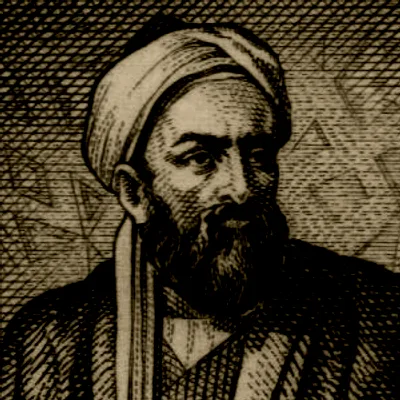
Al-BiruniFind out which cities suit you with Al-Biruni
973–1048 · Astrocartography (locational astrology) · Khwarazm · GhazniA travelling scholar who kept geography and the sky in the same notebook: he measured the latitude and longitude of cities and worked out the Earth's radius from a mountaintop. He draws your birth chart's planetary lines on the world map and reminds you: a place does not change you, it decides which side of you comes forward.
Whose chart?
Your planetary lines
Hover or tap a line to see its meaning. Tap an empty spot to analyse that point.Ask Al-Biruni
AI Astrocartography Reading
Which city is good for you, where would you be more visible, where more at peace? Al-Biruni draws the MC, IC, ASC and DSC lines of the 10 planets in your birth chart from My Charts onto a world map with AstroSitus's own calculator and writes your astrocartography reading; tap a city and you instantly see the nearby lines, their distances and the relocated Ascendant and MC. Pick a goal (career, love, peace, education, creativity) and he ranks the regions that suit you, starting inside your own country, and describes the hard lines without fear.
How does an astrocartography reading work?
An astrocartography reading looks at your birth chart's planetary lines together with a goal and specific places: it asks questions such as "What does this city bring out in me?" or "Which region suits my career better?". The lines are drawn from the places where each planet was rising (ASC), setting (DSC), at the top of the sky (MC) and directly underfoot (IC) at the moment of birth: MC and IC are straight north–south meridians, while ASC and DSC are curves that bend across the continents. To see your lines without an account and read the method in detail, open the free astrocartography map.
Which city is good for me?
The reading starts from the lines that fit your goal: for career and visibility, the MC lines of the Sun and Jupiter; for love, the DSC and ASC lines of Venus, the Moon and Jupiter; for peace and home, the IC lines of the Moon, Venus and Jupiter; for education, Mercury and Jupiter; for creativity, the Sun and Venus. Then the hard lines passing near the same place (Saturn, Mars, Pluto, Neptune) are weighed; a place is read from the sum of the lines near it, not from a single line. (Planets guide)
A short history
The American astrologer Jim Lewis popularised the method in the 1970s with computer-drawn maps and registered its name; The AstroCartoGraphy Book of Maps by Lewis and Ariel Guttman compared famous people's lives with their lines. The idea that a planet is strongest on an angle is much older: since Ptolemy, planets on the angles have been considered the most powerful.
Key concepts
- Line and distance: A line is strongest right on it and weakens with distance; sources give limits from a few hundred to nearly 1,000 kilometres. AstroSitus counts strong influence up to 300 km, medium up to 600 km and weak up to 800 km.
- Relocated chart: The birth moment stays the same and only the place changes, so the Ascendant, MC and planetary houses are recalculated for the new location.
- Paran: A crossing where two planets are angular at the same moment; it is felt along that latitude band.
- Birth time: The Earth turns 15° an hour, so a four-minute error shifts the lines by about one degree of longitude; an accurate birth time matters.
How does Al-Biruni work on AstroSitus?
- 1You pick a person with a known birth time from My Charts; the calculator draws 40 lines (10 planets × MC, IC, ASC, DSC) and the parans on a world map from the planetary positions at birth.
- 2You tap the map or search a city: the lines near that point appear instantly with their distances in kilometres and strengths, together with the relocated Ascendant and MC.
- 3If you choose a goal and your current location, the calculator scores more than 4,000 cities; it picks highlighted regions first within your country, then from neighbouring countries, your continent and the world, and separately lists where the hard planetary lines pass.
- 4Al-Biruni interprets these results without changing them: why each region fits, and what your chosen and current place bring forward in you; you can go deeper with follow-up questions.
Who was Al-Biruni?
Abu Rayhan Muhammad ibn Ahmad al-Biruni (973–1048) was born in Kath, the capital of Khwarazm, and spent his last years in Ghazni. He wrote more than a hundred works on astronomy, mathematics, geography, pharmacology and history. His Kitab al-Tafhim li-Awa'il Sina'at al-Tanjim (Book of Instruction in the Elements of the Art of Astrology) explains astronomy and astrology in question-and-answer form. In the Tahdid Nihayat al-Amakin he developed methods for determining the latitude and longitude of cities, and al-Qanun al-Mas'udi is one of the most comprehensive astronomical works of its time. During Mahmud of Ghazni's campaigns he spent years in India and wrote the Tahqiq ma li'l-Hind. He is known for calculating the Earth's radius by measuring the dip of the horizon from a mountaintop near Pind Dadan Khan. AstroSitus's Al-Biruni is an AI advisor inspired by his way of reading the sky and geography together.
Astrocartography reading FAQ
Can astrocartography tell me which city is good for me?
It shows tendencies; it doesn't decide for you. Al-Biruni scores more than 4,000 cities by how close they are to your lines for the goal you choose (career, love, peace, education, creativity) and ranks the highlighted regions with their reasons. It does not replace concrete factors such as work, cost, health and family when you decide to move.
What do the planetary lines mean?
Near a planet's line its themes become more visible in your life: relationships and beauty on Venus lines, opportunity and growth on Jupiter, responsibility and effort on Saturn. MC relates to career and visibility, IC to home and roots, ASC to personality and body, DSC to relationships and partnerships.
How far does a line's influence reach?
Sources differ; influence is strongest on the line and fades with distance. AstroSitus counts strong influence up to 300 km, medium up to 600 km and weak up to 800 km.
Is living on a Saturn or Mars line bad?
No. Hard lines are not forbidden zones; they are places where experiences asking for discipline, courage and transformation concentrate. Al-Biruni calls them "hard but instructive".
Can I use it without a birth time?
You can see the lines, but their positions are unreliable: the Earth turns 15° an hour, so a four-minute error shifts the lines by a degree of longitude. Al-Biruni's reading needs a birth time.
What is a relocated chart?
A chart where the birth moment stays the same but the place changes. In the new place the Ascendant, MC and planetary houses shift; Al-Biruni shows these for the city you pick.
What is a paran?
The point where two planets are angular at the same moment, that is, where their lines cross. A paran is felt not only at the crossing but along that latitude band.
Is it paid, and how often can I ask?
The lines and city analysis are free and unlimited for members. Al-Biruni's readings are available a limited number of times per day with free membership, and you can ask follow-up questions on each reading.
Related AI advisors
✦Al-Biruni is an AI advisor inspired by the geographic and astronomical legacy of Abu Rayhan al-Biruni; the lines are drawn by AstroSitus's own calculator. It does not decide a move on its own.