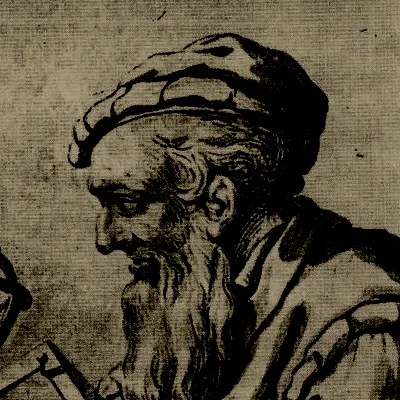
BonattiChoose the right moment with Bonatti
c. 1210–1296 · Electional astrology · ForlìAstrologer of Forlì, author of the Liber Astronomiae and the strictest medieval master of beginnings. He looks first at the Moon, then the Ascendant and the house of the matter; he promises no perfect moment, only the least harmful one.
AI Electional Astrology
Electional astrology is the art of choosing the most favourable sky for beginning something. Bonatti scans your date range and place hour by hour in AstroSitus's own calculation engine: is the Moon void of course or in the Via Combusta, are the Ascendant and its ruler strong, is there a malefic in the house of the matter, is Mercury retrograde? Every moment is scored by traditional rules, the best three are picked from different days, and the days to avoid are listed with their reasons. Add your birth chart and he also tells you where the chosen moment falls in it.
What is electional astrology?
Electional astrology is the practice of choosing the most favourable sky to begin something important. The idea is simple: like a birth, every beginning has its own chart. When you choose a date and time for a wedding, a contract signing, a shop opening or a move, that chart is read as the moment the venture is born, showing its character and course. In short, electional astrology is the classic way to find an astrologically good day and hour.
A short history
Choosing an auspicious time goes back to Babylonian practice, and Indian astrology has a similar tradition called muhurta. In the Western tradition, the oldest known detailed text on elections is the fifth book of Dorotheus of Sidon's Carmen Astrologicum, from the 1st century CE. The method grew in the hands of Arabic-language astrologers and, in the 13th century, became a detailed rulebook in Latin Europe with Guido Bonatti's Liber Astronomiae. Later astrologers such as William Lilly kept passing these rules on.
The core rules
- The Moon: the Moon is the most important factor in an election. You look for a strong Moon kept clear of the malefics, and avoid a void-of-course Moon, one that makes no further aspect before leaving her sign. Tradition also treats the Via Combusta, from mid-Libra to mid-Scorpio, as a stretch to avoid.
- The Ascendant and its ruler: the Ascendant of the starting moment stands for the venture itself, and the strength of its ruler for how well it lasts.
- The house of the matter: every purpose has its house: the 7th for marriage, the 10th for career and business, the 4th for moving home. You want strength in that house and its ruler, and distance from the malefics, Mars and Saturn. (Houses guide)
- Periods to avoid: the days around eclipses and, for communication-heavy purposes such as signing, applications and launches, Mercury retrograde. See the meaning of eclipses for more.
Tradition also reminds us of one key principle: a perfect moment almost never exists. An election means finding the moment with the fewest faults and bringing forward the strengths that suit the purpose.
Choosing a wedding date with electional astrology
The most common question is the wedding date. For marriage, the 7th house and its ruler, Venus as the natural significator of marriage, and the Moon are weighed together: you want a strong Venus that isn't retrograde and a waxing Moon that isn't applying to a malefic. A flexible date makes the election far more effective, but even with a fixed date the best hour of that day can be chosen. If you add your birth chart, where the chosen moment falls in it is read as well. If you're curious about how two people's charts fit together, that's what the relationship astrology advisor is for.
What it can and can't answer
Electional astrology doesn't guarantee an outcome; preparation, effort and circumstances still decide a great deal. It is a way to improve timing when the start date is flexible. Asking whether something will happen at all is a question for horary (horary astrology), and personal period themes belong to the astrology forecast. On AstroSitus, timing surgery and medical procedures is deliberately left out.
How Bonatti works on AstroSitus
- 1You choose your purpose (wedding, starting a business, signing, moving, travel, an application or a launch), a date range of up to 90 days and a place; you can also add your birth chart from My Charts.
- 2AstroSitus's engine scans the range in 15-minute steps with Regiomontanus houses and the seven traditional planets, checking for a void-of-course Moon, the Via Combusta, the Ascendant and its ruler, the house of the matter, malefics, eclipses and, where relevant, Mercury retrograde.
- 3Every moment is scored by traditional rules; the best three are picked from different days and the days to avoid are listed with their reasons.
- 4Bonatti interprets the results without changing any score or time, naming each moment's strengths and faults plainly; you can go deeper with follow-up questions.
Who was Guido Bonatti?
Guido Bonatti was the most celebrated Italian astrologer of the 13th century. His exact dates of birth and death are unknown; he is closely associated with the city of Forlì and probably died between 1296 and 1300. He worked in mathematics, astronomy and astrology and advised many of the powerful rulers of his day.
Astrologer to princes
Those he served included the Holy Roman Emperor Frederick II, Ezzelino da Romano, Guido Novello da Polenta and Guido da Montefeltro, all on the Ghibelline side. He also worked for the city governments of Florence, Siena and Forlì. He is known for winning a 1233 debate in Bologna against the friar Giovanni Schio of Vicenza, who argued that astrology had no scientific basis. According to an anecdote, he told the Count of Montefeltro that he would drive off the enemy but be wounded; the count rode out carrying dressings for the wound, and when things turned out as foretold he became a devoted believer in astrology.
The Liber Astronomiae
Bonatti's major work is the Liber Astronomiae (Book of Astronomy), written around 1277. Covering everything from first principles to birth charts, horary, elections and mundane astrology, it remained a classic textbook for two centuries. His advice known as the "146 Considerations" was read by later generations; the Anima Astrologiae, published by William Lilly in 1676, contains them in English. Bonatti is also thought to have been one of the first astrologers to use midpoints, the halfway point between two planets.
Dante and legend
In Canto 20 of the Inferno, Dante places Bonatti among the diviners who, for trying to see the future, must walk with their heads twisted backwards. He is also said to have joined the Franciscans late in life, though this is disputed, since he is known to have scorned them when younger. According to an uncorroborated report passed on by the historian Muratori, he was killed by robbers on his way back from a study trip to Paris and other Italian cities.
AstroSitus's Bonatti is an AI advisor inspired by Guido Bonatti's rules for elections; he is not Bonatti himself and does not speak on his behalf.
Electional astrology FAQ
What is electional astrology?
It rests on the idea that the moment you begin something has a chart too: for a wedding, a signing or an opening, the most favourable sky is chosen. Tradition looks above all to the Moon, the Ascendant and the house of the matter.
How do you choose a wedding date with electional astrology?
For marriage, the 7th house and its ruler, Venus and the Moon are weighed together: you look for a strong Venus that isn't retrograde and a waxing Moon that isn't applying to a malefic, void of course or in the Via Combusta. Bonatti scans your range and suggests the best three moments on different days.
Which purposes does Bonatti elect for?
Weddings, starting a business, signing contracts, moving house, journeys, applications, and product or website launches. Surgery and medical procedures are deliberately not timed.
Is there a perfect moment?
No. The traditional principle is that there is no perfect moment, only the least harmful one. Bonatti states each moment's strengths and faults openly.
Is Mercury retrograde a problem for everything?
No. Bonatti counts Mercury retrograde as a penalty only for communication- and signature-heavy purposes (signing, applications, launches); for a wedding or a move it is not an obstacle on its own.
What does a void-of-course Moon mean?
It is the stretch when the Moon makes no further aspect before leaving her sign. Tradition says matters begun then hang in the air; those hours appear in the list of days to avoid.
Do I need my birth chart?
No, but if you add it from My Charts, Bonatti also reads which of your houses the chosen Ascendant and Moon fall in and any important contacts.
How far ahead can I scan, and is it free?
Each scan covers up to 90 days; for a longer period, split it into several scans. With a free membership you can run a limited number of elections each day and ask follow-up questions on each.
Related AI advisors
✦Bonatti is an AI advisor inspired by the method and voice of Guido Bonatti; AstroSitus's engine computes the moments. Electional astrology is a guide; it does not replace legal, financial or medical decisions.